An apartment move can look easy on paper. You pack a few rooms, load the truck, drive to the new place, and unload.
In reality, apartments often make moving a little more complicated.
The truck may not be able to park directly in front of the building. The elevator may need to be reserved. A sofa that fit perfectly in your old living room might not make it through the new doorway. And if you’re carrying boxes up three flights of stairs, you’ll quickly realize that a short move isn’t always an easy move.
If you’re getting ready to move into an apartment in Los Angeles, Orange County, Riverside, San Bernardino, or San Diego, a little preparation can save you a lot of trouble on moving day.
Talk to Your Apartment Management First
Before you start moving boxes, find out what your building allows.
Every apartment is a little different. Some buildings have specific moving hours. Others require you to reserve an elevator or use a particular entrance. You may also need to give management the moving company’s information ahead of time.
Ask about the things that could affect the move:
- Is there a freight or service elevator?
- Do I need to reserve it?
- Where can the moving truck park?
- Is there a loading area?
- Are there specific moving hours?
- Does the building require a certificate of insurance from the movers?
It only takes a few minutes to get these answers. Finding out after the truck arrives is a much less convenient time.
Measure the Furniture Before Moving Day
One of the most frustrating apartment-moving problems is discovering that a piece of furniture doesn’t fit.
Take a few measurements before the move, especially for large sofas, beds, dressers and cabinets. Check the apartment entrance, elevator doors and any narrow hallways or turns the furniture will have to pass through.
Don’t forget about stairways.
A couch might fit through the front door but still get stuck at a tight corner in the hallway. Knowing this ahead of time gives you time to figure out another solution.
Don’t Leave Parking to Chance
Parking is easy to overlook when you’re focused on packing.
But for the moving crew, the distance between the truck and the apartment matters. Carrying furniture an extra 100 feet for every trip adds up quickly.
If you’re moving into a busy area of Los Angeles or another part of Southern California where street parking is limited, ask the building where a moving truck is allowed to stop.
If there’s a designated loading area, make sure it’s available during your moving window.
The easier it is for the crew to get from the truck to the building, the smoother the move usually goes.
Keep Your First-Night Items Separate
You probably won’t unpack the entire apartment on the first evening.
Keep a small bag or box with the things you’ll need right away: chargers, toiletries, a change of clothes, medications, towels, basic cleaning supplies and anything else you normally reach for at the end of the day.
Put it somewhere you can easily find it.
The last thing you want after a long day of moving is to open fifteen boxes looking for a phone charger.
Be Careful With Large and Heavy Furniture
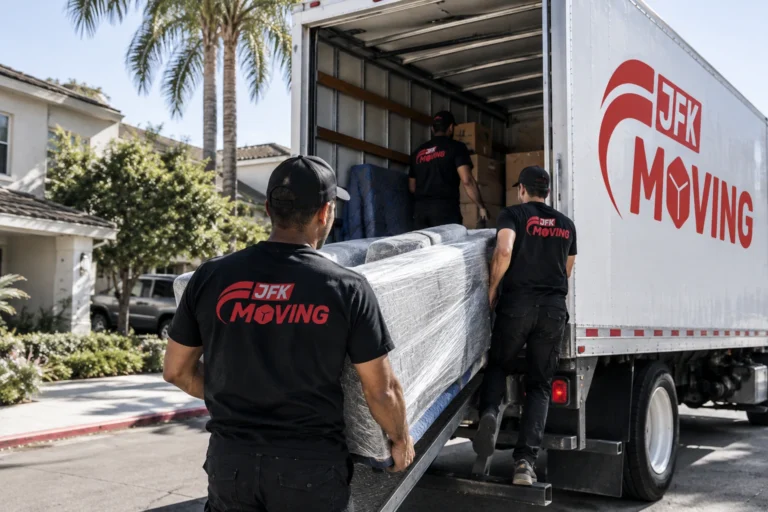
Apartment buildings have more tight spaces than a typical house. Hallways, elevators, door frames and staircases can all create problems when you’re moving large furniture.
Protecting the furniture is only part of the job. Walls, floors and door frames need attention too.
This is one reason many apartment residents choose to hire professional movers instead of trying to handle the larger pieces themselves. Experienced movers know how to work around tight spaces and use the right equipment for heavy items.
What If Your Apartment Doesn’t Have an Elevator?
That’s something your movers should know before the move.
A third-floor walk-up is very different from a first-floor apartment with a truck parked outside the entrance. Stairs can add considerable time to a move, particularly when you’re dealing with large furniture.
Tell the moving company how many flights are involved and whether there are any narrow stairways or difficult turns.
Accurate information helps the crew prepare for the job and gives you a more realistic expectation of how long the move will take.
Take the Opportunity to Get Rid of Things You Don’t Need
Moving is a good time to be honest about what you actually want to take with you.
That old chair you’ve been meaning to replace? The boxes you haven’t opened in two years? Kitchen appliances you never use?
You don’t have to move them just because they’re already in your home.
Donate what you can, sell things that are worth selling, and get rid of items that are no longer useful. Fewer things mean fewer boxes, less lifting and more room in your new apartment.
Label Boxes for the New Apartment
You don’t need a complicated labeling system.
Just make sure the room is obvious.
For example:
Bedroom — Bedding
Kitchen — Plates & Glasses
Bathroom — Towels
Living Room — Electronics
This makes unloading much easier. Instead of having every box dropped in the living room, movers can place boxes closer to where you’ll eventually unpack them.
When Should You Book Apartment Movers?
Once you know your move-in date, it’s worth contacting movers sooner rather than later.
This is especially true if you’re moving on a weekend, need an elevator reservation, have a narrow moving window, or need help packing.
Apartment management and the moving company also need to be coordinated. Booking early gives you more time to make sure the moving window works for everyone.
How Long Does an Apartment Move Take?
There isn’t a standard amount of time for an apartment move.
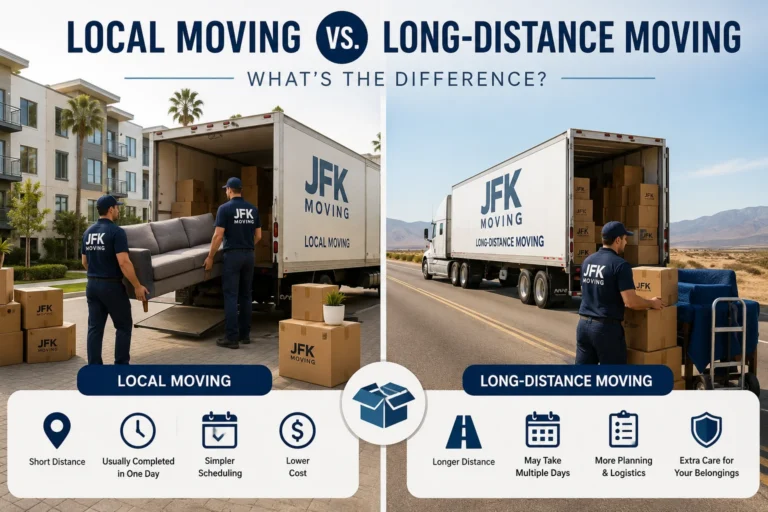
A small studio with easy parking and a nearby elevator may be relatively quick. A larger apartment on the third floor with limited parking can take much longer, even if the new apartment is only a few miles away.
The number of rooms matters, but so do the details of the building.
That’s why it’s useful to tell your movers about stairs, elevators, parking, large furniture and any unusual access issues when you request a quote.
A Simple Apartment Moving Checklist
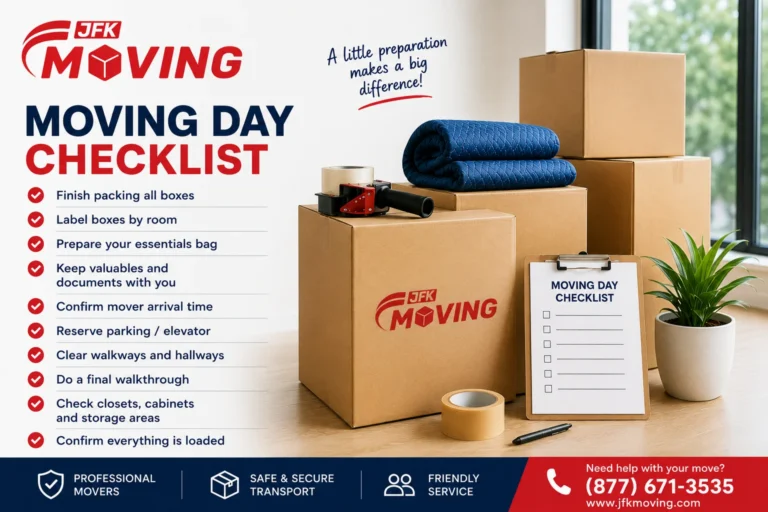
Before moving day, make sure you’ve:
- Confirmed your move-in date
- Checked the building’s moving rules
- Reserved the elevator if necessary
- Confirmed where the truck can park
- Measured large furniture and tight entrances
- Packed an essentials bag
- Labeled your boxes
- Set aside valuables and important documents
- Confirmed the moving time with your movers
A few minutes of planning can prevent a lot of unnecessary stress later.
Moving Into an Apartment in Southern California?
Apartment moves are one of the types of moves where the small details matter.
Whether you’re moving across Los Angeles, relocating within Orange County, or moving to a new apartment in Riverside, San Bernardino or San Diego, the building itself can have as much impact on the move as the distance between the two addresses.
JFK Moving helps residents throughout Southern California with apartment and residential moves, including moves involving stairs, elevators and tight spaces.
If you’re planning an apartment move, give us the details of your building and we’ll help you plan the move around them.
Let's Make Your Move Effortless.
Get a free, no-obligation quote from our certified moving specialists. We'll match you with the right team and plan for a seamless long-distance move.